


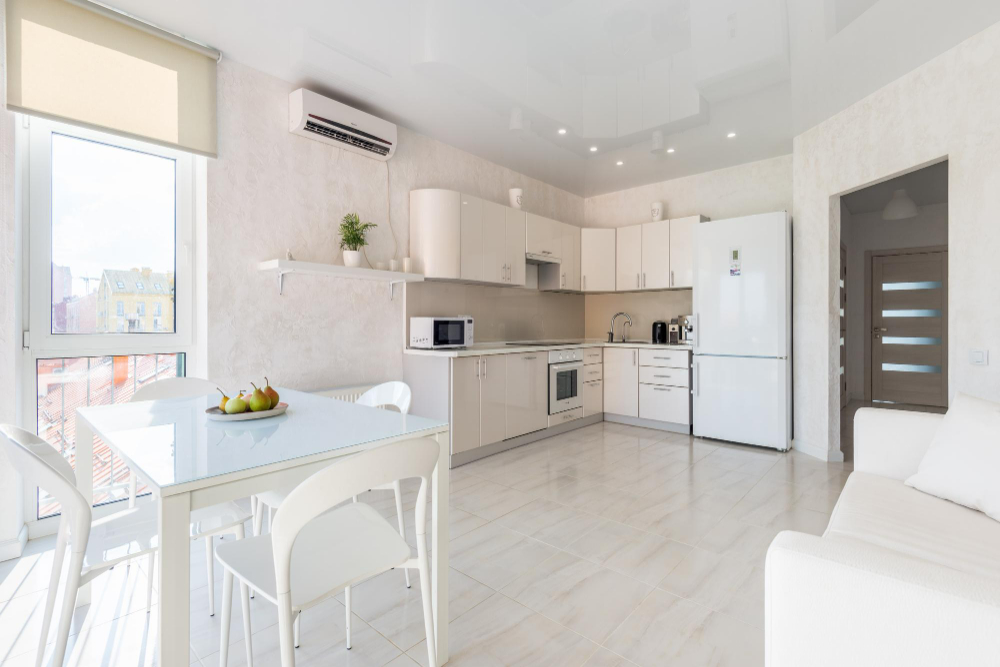
The kitchen is an environment with elevated temperatures, dynamic changes in humidity and high levels of air pollution. The use of an air conditioner can significantly improve thermal comfort and reduce overheating in the work area, but it requires careful selection of power, proper location of the unit and a rigorous approach to operation and hygiene of the device.
Operating conditions of the unit in the kitchen: heat balance and humidity load
In the kitchen, heat sources are both continuous and intermittent. The heat load includes gains from the hob, oven, dishwasher, lighting and solar radiation through the glazing. In practice, this means that design parameters based solely on floor space may be insufficient. Moisture load is equally important: cooking generates water vapour, which increases relative humidity and increases the share of latent energy in the total cooling load. For an air conditioner, this translates into the need for effective air dehumidification, stable compressor operation and properly executed condensate management.
In a kitchen environment, the quality of the air flowing through the evaporator is particularly important. The air contains tiny particles of grease and frying products, which can settle on the filters and fins of the heat exchanger. This increases flow resistance, reduces efficiency and also poses a risk of odour emissions resulting from the degradation of organic deposits. For this reason, the standard filter cleaning schedule for other rooms does not usually apply: in the kitchen, filters should be checked and cleaned more frequently, especially during periods of intensive cooking. If the appliance has a function to dry the exchanger after operation (so-called evaporator drying), it is worth using it, as it reduces the long-term accumulation of moisture in the exchanger area and thus reduces the risk of microorganism growth.
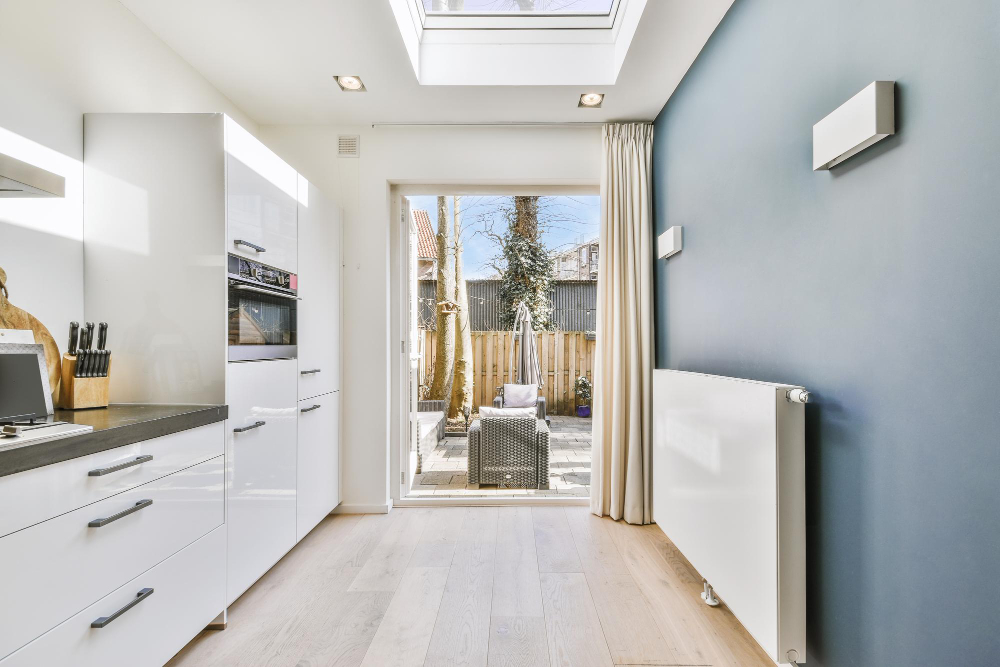
Selecting the power and type of device: how to avoid cycling and airflow discomfort
The most common design errors result from underestimating the load and incorrect selection of cooling capacity. Too little power causes the device to run at high speed most of the time, which increases noise and energy consumption and does not always ensure adequate humidity reduction. Excessive power can lead to compressor cycling (short operating cycles), which worsens parameter stability and may reduce dehumidification efficiency. In modern inverter devices, this phenomenon is usually milder, but it can still occur with significant oversizing.
In the kitchen, the location of the indoor unit should be planned with particular care. Installation in the immediate vicinity of the hob or near the extractor hood promotes the intake of air laden with grease and steam, which accelerates the fouling of the heat exchanger. It is recommended to place the unit in a location where the air is relatively ‘cleaner’ and where the airflow will be able to mix effectively with the air in the room. The direction and nature of the airflow is equally important: in the kitchen, people often stay in a fixed position at the worktop, so direct airflow onto the user can cause local discomfort and a draught sensation. This can be remedied by using diffused airflow, automatic blind adjustment and maintaining a moderate temperature difference between the supply air and the room temperature.
Ventilation, extractor hood and air conditioning: cooperation instead of a ‘battle for air’
An air conditioner is not a device for removing odours or combustion products; this is the responsibility of ventilation and the kitchen extractor hood. Air conditioning stabilises the temperature and reduces humidity to a certain extent, but without efficient exhaust ventilation, the kitchen may remain filled with odours and aerosols despite the noticeable coolness. Therefore, the decision to install an air conditioner should be linked to an assessment of the performance of gravity or mechanical ventilation and the efficiency of the extractor hood.
Air flow balance is an important issue. A high-performance cooker hood operating at maximum speed can create negative pressure and remove air from the kitchen intensively. If the supply of outside air is limited (airtight windows, no air vents), the hood may interfere with ventilation or cause uncontrolled air inflows through leaks. From an air conditioning perspective, this means increased losses of ‘produced cool air’ and thus higher operating costs. It is good practice to ensure a controlled air supply (e.g. window or wall vents) and to use the hood appropriately for the situation: the highest speeds only during intensive frying, and at other times at a level that ensures effective extraction with as stable a balance as possible.
It is also worth remembering that in open kitchens, the airflow from the air conditioner should be considered in the context of the entire living area. Sometimes it is more effective to place the unit outside the immediate cooking area so that the airflow supports air exchange throughout the room rather than cooling only a specific part of the kitchen.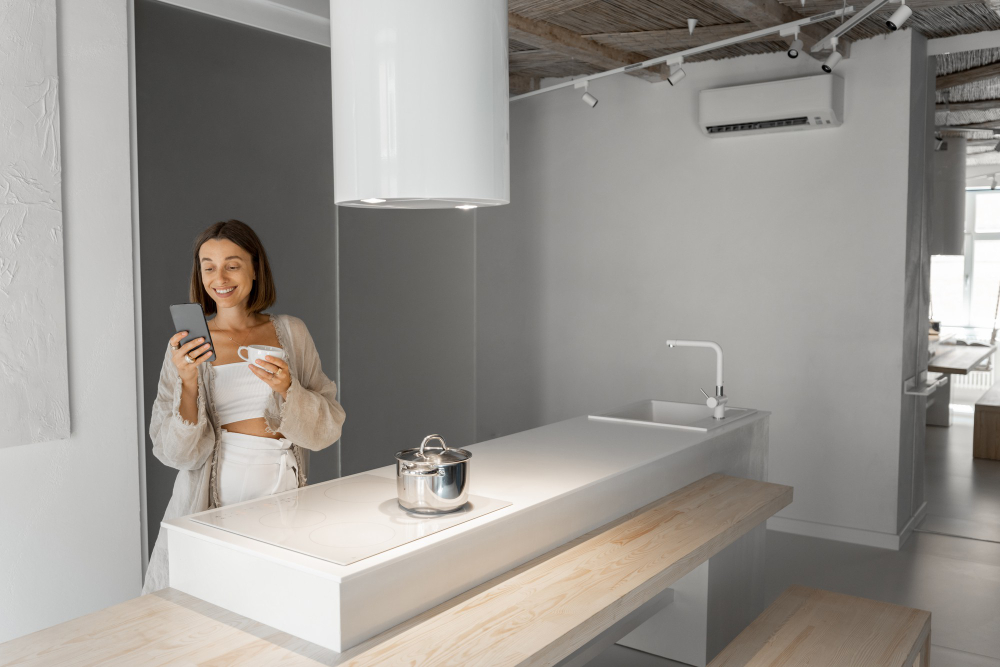
Operation and maintenance: condensate, dirt and actual maintenance costs
Proper condensate drainage is particularly important in the kitchen. The condensate drain should have an adequate slope, be properly connected to the sewage system or gravity drain, and be equipped with safeguards to reduce the risk of liquid and odours backing up from the system. When using a condensate pump, its noise level, reliability and service accessibility should be taken into account. Any negligence in this area may result in moisture damage to furniture, water stains on the wall or failure of the unit’s electronics.
The second area is the contamination of the exchanger and filters. In the kitchen, it is not enough to ‘vacuum the filter periodically’: systematic cleaning of the filters, inspection of the condensate tray and periodic cleaning of the evaporator and fan by a service technician are necessary. A dirty heat exchanger not only reduces efficiency and increases energy consumption, but also increases the risk of unpleasant odours and uneven operation of the unit. If the kitchen is used intensively, it makes sense to shorten the service intervals compared to ‘dry’ and less polluted rooms.
Is it worth it? If the kitchen is a place where cooking takes place regularly and overheating significantly reduces comfort and functionality, air conditioning is a technically justified solution. In kitchens that are used sporadically, improving heat gain reduction (shading windows, better ventilation organisation, optimising the hood) can have a greater effect. An air conditioner in the kitchen is a good idea when it is treated as part of the whole system: selecting the power to match the actual load, installing it outside the area of greatest pollution, controlling the air balance, and consistent hygiene and servicing.

Zarządzanie sprzedażą – odpowiada za kompleksową obsługę procesów sprzedażowych, analizę rynku oraz przygotowywanie ofert dostosowanych do potrzeb klientów.
Doradztwo techniczne HVAC – zapewnia specjalistyczne wsparcie w zakresie doboru, konfiguracji i eksploatacji urządzeń HVAC, dostosowanych do konkretnych projektów.
Koordynacja projektów – nadzoruje realizację inwestycji, współpracując z zespołami technicznymi i kontrolując działania podwykonawców, by zapewnić terminowość i jakość wykonania.
Serwis i montaż – organizuje i nadzoruje prace instalacyjne oraz serwisowe, dbając o sprawne wdrożenie systemów.
Sprzedaż i doradztwo produktowe – współpracuje z instalatorami, projektantami oraz deweloperami, oferując rozwiązania w zakresie wentylacji, rekuperacji i chłodnictwa.
Tworzenie ofert i wycen – przygotowuje konkurencyjne propozycje handlowe, opierając się na szczegółowej analizie kosztów i oczekiwań klienta.
- Ventilation in server rooms — cooling data of great importance - 25 November 2025